Anyone who cynically believes serious artists enjoy adoration never met David Simon.
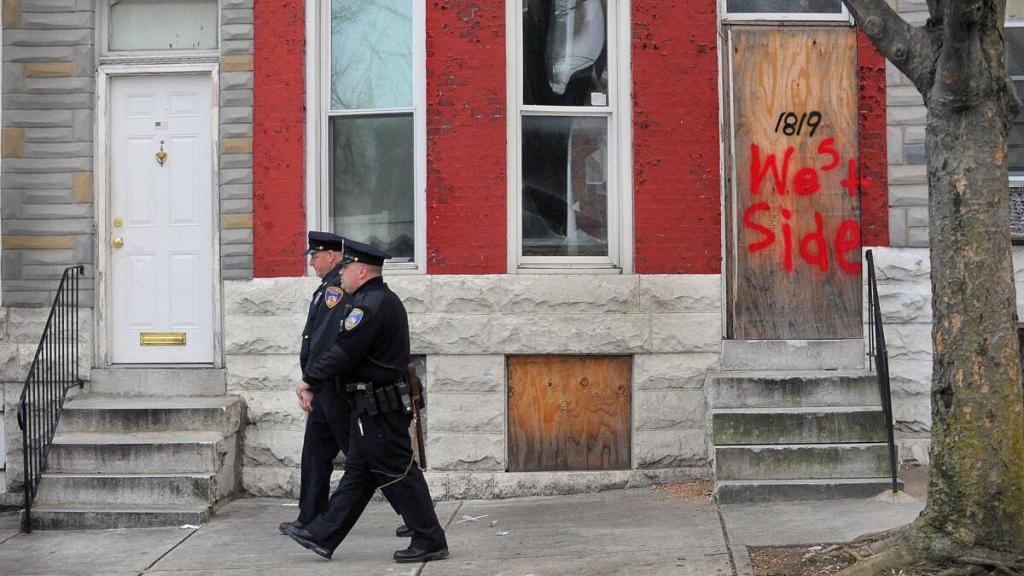
At a Q&A in 2018, he quelled the applause the second he got on stage, declaring, “You know ‘The Wire’ was a failure, right?” We, the mostly white audience at the Sagamore Pendry that once housed the gritty Baltimore police station where he filmed Homicide: Life on the Street, laughed. He did not want us to laugh. He did not reciprocate with a smile. As we sat in that swanky Fells Point hotel — an emblem of Baltimore’s misbegotten gentrification, a shell of the genuine article Simon once captured on film — I felt complicit in some way. I felt how Nick Sobotka felt peering through the fence at a relic of the past.
Everyone uniformly calls The Wire totemic: It’s the greatest series of all time, if you actually care about America. It’s a work of art executed totally artlessly. That’s the art, isn’t it? Documentary as prestige television? A diehard talking to a beginner says “no one understands it,” that it requires repeat viewings and subtitles and repeat viewings with subtitles to follow its story, or plot, or countless characters that could fill every seat in Camden Yards. It’s been called “eating your vegetables”; this series about inequality and powerful men steering institutions deeper into dysfunction has, laughably, emerged as an academic centerpiece for some of our wealthiest, most solidly white institutions. Simon’s addition of David Parenti in Season 4 was no doubt the creator getting ahead of the joke.
I saw The Wire as a chore the second I stumbled into my living room, all of 10 years old. My dad removed the Season 2 disc from the washed-out, ominously blank box set. He cued up an episode and was rapt; I saw ugly white guys moving shipping containers and was bored beyond belief, ready to grab our landline and call CPS.
This is a show that makes you feel small, dragging your bare feet across the concrete of its plot density, its 320 characters cutting up your attention so as to be collectively empty. All the pieces matter, which makes how they get lost among the other pieces all the more tragic. Everyone matters, but no one matters. They usually just die without consequence. Two men are left standing, technically, at the finale. It’s not a spoiler, because you will feel the same nothing upon knowing this as if you watched it. I’ve watched the series twice. I still feel nothing.
The dichotomy of The Wire, the freakshow of its intelligence, is you are meant to be emptier after watching it than before. This is a series whose deftness at drawing you into parasocial relationships with its nuanced characters is capital punishment; it wants you to follow them, through the towers and corners and boarded-up, rat-infested, grocery cart-pushing toilet that is the city of Baltimore. The show cons you into feeling for these villains, these careerists, these makeshift humans disguising as morality refrigerators that open up to anyone looking for a temporary respite from the heat, only for someone, or something, to hastily destroy them.
There is no Baltimore in The Wire; it is just David Simon’s Baltimore. In his Baltimore, the sun is setting quickly. The cops speak of it like a fading empire, a mythological totem destroyed by some mighty force beyond their grasp, as if these meekly equipped homicide detectives actually cared to rescue it if it didn’t improve their careers. “The gods will not save you,” Police Commissioner Ervin Burrell says as he orders his men to increase arrests, acknowledging it is for the appearance of effectiveness over effectiveness itself. The jerry-built structures of The Wire’s Baltimore comprise the most precise, meticulously depicted dystopia: Everything is horribly wrong, yet we perpetuate it for survival. In Simon’s Baltimore, the fabric of the police department has been withering for years. Capitalism trumps meritocracy, even when there are 22 sarcophaguses being ripped out of vacant row homes.
Police, in this show, assault heroin addicts who were already registered CIs. Bald, greasy-chinned, plain-clothed pricks openly tout their penchant for abusing anyone they see on their corners, sometimes while throwing them in the back of “coffin wagons.” They plant evidence and steal money. Baltimore cops, in this show, are scum bums. They’re misinformed scum bums, Napoleonic-complex scum bums, and in Rawls’s case… Well, if you freeze-framed his one moment in that bar, you get it.
Despite his absence of Shakespearean subtlety, David Simon knows how to draw our affection away from the “good guys” and toward the “bad guys.” Avon said you only do two days – the day you go in, the day you go out – but Cutty did all of his days inside. He is the sole character rehabilitated by the State of Maryland, Simon’s only crumb of optimism in the criminal justice system. Wee-Bey, a mass murderer serving life, fulfills a decent father’s fundamental goal of providing more opportunities for his son than he ever had. Even Business School Stringer, enthusiastically trying to rise above the game with development projects he naively misplaced himself in, demonstrated an intellectual curiosity away from crime. Marlo occupying that businessman role by the end, without effort or a fuck to give to its importance, makes Stringer’s fate devastating in hindsight. You finally understand someone, they die, then someone worse comes along to make you question yourself.
The Wire is a miasma of questions, brutally propositioned and rarely satisfyingly answered. Having watched this show over the last six weeks, mercilessly, at the detriment of my girlfriend’s fake adherence to my good taste, I find myself destroyed by its brilliance. In my lifetime of cinephilia, I have never come across something so consistently evocative, so entertaining in its brutal replication of institutional dysfunction at every level of how we operate as a civilization. It’s thrilling and horrifying to think what David Simon could’ve done if HBO had let him run and run forever: through immigration, through Johns Hopkins, through Annapolis. O’Malley, whom Carcetti was sculpted after for all the obvious reasons, wanted to rescind city permits for filming because he was upset about the Baltimore on screen. I’d have loved to see Simon’s face during all that. As a crime reporter for years, in breathless pursuit of exactly that kind of Burrell-ian chicanery, he would’ve pumped that into future episodes. To him, that’s just another way of juking the stats.
HBO has gladly taken care of David Simon since the show wrapped in 2007. New shows and miniseries abound, all with his name, only some with their cults. My college friends decry my failed attempts at Treme, but I stand tall for the mundanity and dark humor Generation Kill shares with The Wire. If he had covered Detroit or Boston or any other major city during his days as a newspaper man, it’s astonishing to think how different that kind of show might’ve been, how his painterly details might be different from Baltimore’s despite rhyming from a distance.
But he made a show about Baltimore, and Baltimore has changed. The argument that We Own This City – an even more aggressive confrontation with the sins of my hometown – is the spiritual Season 6 of The Wire stems merely from their modest ratings despite critical acclaim. Simon adapted We Own This City from the book vy Justin Fenton, a tenacious, award-winning crime reporter and likely Simon’s spiritual successor, but Simon didn’t have his heart in the characters the way he did with The Wire.
Probably because the spirit of the city regressed into something even Simon, the spokesperson for urban despair, couldn’t comprehend. It’s honestly Fenton’s work that has perpetuated The Wire’s legacy to this day, everywhere across the country, for everyone that meekly asks, “Is Baltimore like The Wire?” You’d be hard-pressed to find a grimmer era in the history of any American city than what happened in Baltimore after Freddie Gray was murdered in 2015: how, in the wake of that, an underpaid plain-clothes unit turned the drug-riddled areas of the city into their own personal ATM, and how those same enriched officers snatched the soul of a fellow officer to keep their con apace. Homicides that year hit 344, the second-highest on record. They hit 348 four years later. Somehow, that Baltimore became unimaginably more fucked than David Simon’s Baltimore, an already unimaginably fucked entity by creative design. I don’t think David Simon was the right person to adapt We Own This City. I don’t think it should’ve been adapted at all.
The Wire’s longevity presents itself in most moments, but its personal connection comes from a smaller place. My friend John and I were driving back from a visit to Virginia Tech, nauseatingly hungover and requiring engaging conversation to keep ourselves focused on the road. John watched The Wire years ago but knew I was nearly finished with my first run through it.
A week earlier, I angrily stopped watching it. A character died.
I told John that the injustices depicted in one particular Season 5 episode made me so somber and dreadful I couldn’t believe I let a show get ahold of me this way.
“What was the episode?” John asked.
“Transitions.”
“Ah,” John said.
You finally understand someone, they die, then someone worse comes along to make you question yourself.
The Wire is a show I wish I could lock away in a room all by myself. Every time I recommend it, I regret recommending it the second I recommend it, which is most seconds of my waking life. It is the show I’ve dispensed the most words about in parties and bars. It is brilliant, incisive, and more painful than anything you could ever experience. Yes, there is an intimidating barrier to entry: It is a hard-earned show with an almost confrontational absence of clarity. You will feel lost in its haze of characters, but they all indelibly authenticate themselves to you as family over time. Information and dialogue fire at you with blistering, dizzying impact, until you find its groove. The best shows instruct you how to watch it as you’re watching it: Succession had a similar music to it, not just in the cadence and interval with which its actors weaponized but in its tonal balance. The Wire is nowhere near as funny – dividends pay off in hindsight, mainly in the form of Snoop and Drunk McNulty – but it requires a similarly learned attentiveness to everything. You accrue nuggets of its genius as you burrow deeper into its quietly violent, artfully evil world. It is Delayed Gratification: The Show.
It remains without a doubt the most impressive, cinéma vérité headshot to none other than the star: the American city. To watch The Wire is to understand a little bit more about why that traffic light has been out for months, why murder statistics on your local news mean absolutely nothing anymore, why that pot hole you hit downtown every day on your way to work still isn’t filled. David Simon is the bard of the pissed-off, voiceless citizens who have been betrayed by decades of urban rot at the hands of self-preserving milksops who feign to protect a city only by owning a badge and nothing else.
The Wire is perhaps art in its bleakest, darkest tunnel. It had shit ratings throughout its run, because people thought it was Law & Order when it was actually Law & Order as a horror movie with an HBO budget. It is the only unflinching spotlight on the misbegotten enterprise of America. Sinclair Lewis once proposed it can’t happen here. But it has always been here. It will always be here.


 Veritable Tantrum
Leave a comment